How Crewmeister Increased Sales Conversions by Over 30% and Reduced Coaching Overhead with Revenue AI
Crewmeister, a provider of workforce time-tracking software, had built a structured sales playbook that initially improved conversion rates significantly. However, maintaining these improvements required intensive coaching from sales managers, consuming substantial time and resources. Taskbase implemented a centralized, self-updating playbook and an AI-driven sales coach integrated into Microsoft Teams. The system reinforced best practices daily, sustained performance gains, and increased conversions even further while reducing manual coaching effort.
- Industry
- Software
- Founded
- 2017
- Team size
- 101–250
- Headquarters
- Zurich, Switzerland
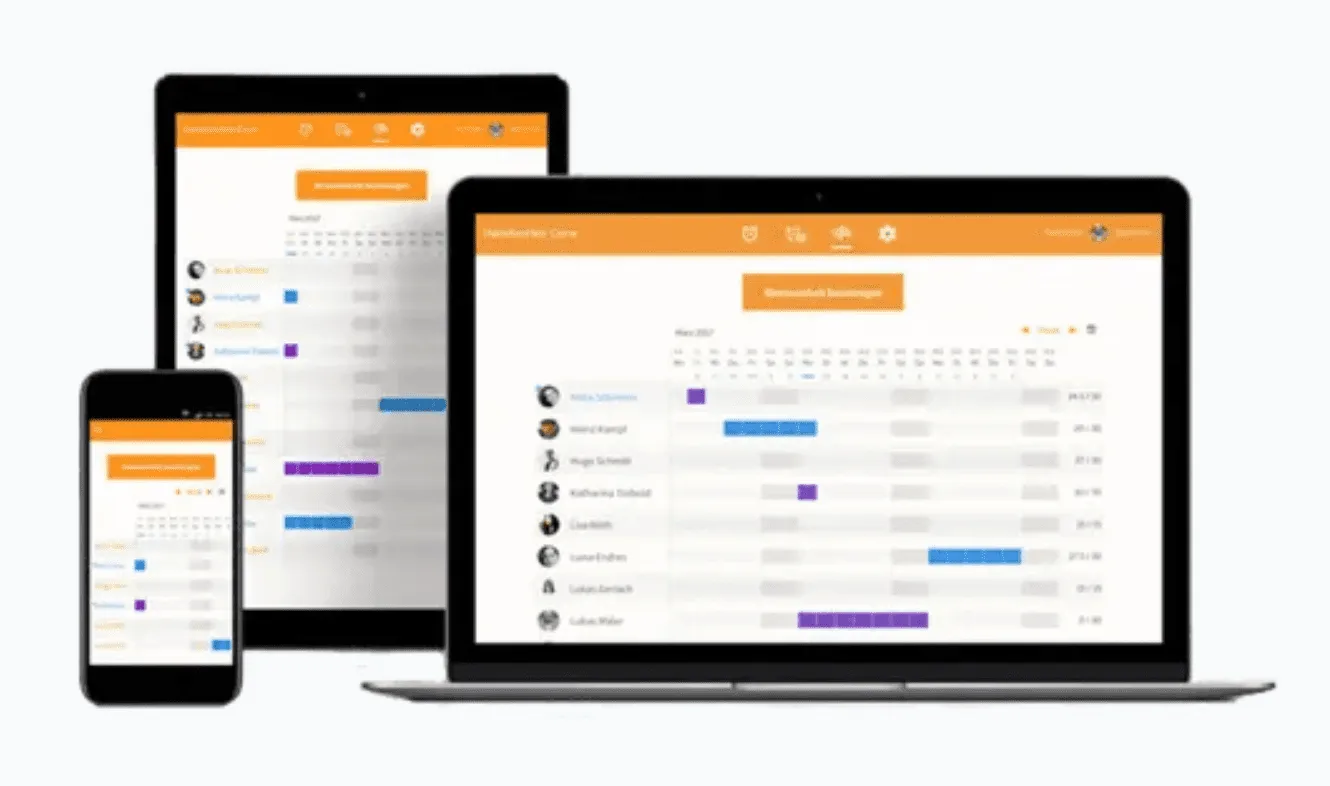
Crewmeister is a software company that provides time-tracking and workforce management solutions for small and medium-sized businesses. The platform is widely used in industries such as gastronomy, healthcare, construction, and cleaning services to manage working hours and workforce scheduling efficiently.
The company operates as part of the larger ATOSS Software group and focuses on delivering intuitive workforce management tools for operational teams. Crewmeister’s sales organisation consists of approximately 15 sales representatives supported by two sales managers and a sales enablement specialist. Their sales motion is primarily inbound-driven, with prospects entering the pipeline through marketing channels and being qualified and closed in relatively short sales cycles.
Situation
Until 2024, Crewmeister’s sales organisation operated with very little structured guidance. Sales representatives handled inbound opportunities independently, without standardised scripts, objection-handling frameworks, or documented best practices.
To improve consistency and performance, the company developed its first comprehensive sales playbook in 2024. The playbook introduced structured talk tracks, objection-handling approaches, and clearer guidance on how to run qualification and closing conversations.
The implementation produced immediate improvements in several key sales metrics, particularly conversion rates.
However, over time the organisation noticed that these gains were difficult to sustain without continuous coaching.
Challenge
While the introduction of a structured playbook initially improved sales performance, Crewmeister quickly discovered that documentation alone was not enough to maintain consistent execution.
Sales representatives gradually reverted to old habits, and the best practices described in the playbook were applied less consistently over time. As a result, the performance improvements achieved immediately after the playbook launch began to decline.
To counteract this effect, sales managers had to invest significant time in coaching activities. Approximately 60% of a sales leader’s time was spent reviewing calls, providing feedback, and reinforcing playbook guidelines.
Maintaining this level of coaching for a team of roughly 15 sales representatives represented a considerable operational cost. In salary terms alone, the coaching effort required roughly CHF 100,000 annually.
Crewmeister therefore faced a structural challenge:
- Playbook improvements could not sustain themselves without continuous reinforcement
- Managers had limited capacity to provide ongoing coaching at scale
- Sales performance risked declining as reps returned to previous habits
The organisation needed a way to embed coaching into daily sales work without relying entirely on manual management effort.
Solution
Taskbase implemented a system designed to operationalise Crewmeister’s playbook and reinforce it continuously through AI-driven coaching.
Centralized and Self-Updating Playbook
The first step was consolidating all existing sales knowledge into a single centralized playbook. Previously, relevant information had been scattered across presentations, internal documentation tools, and enablement materials.
Taskbase unified these resources into one system that continuously evolves.
The playbook now automatically incorporates new knowledge. For example:
- When new objections appear in sales conversations
- When prospects mention previously unknown competitors
- When new successful talk tracks emerge
The system analyses interactions and suggests updates based on existing scripts, product information, and proven sales approaches. As a result, the playbook remains current without requiring manual rewriting or maintenance.
Revenue AI Integrated in Microsoft Teams
The second step was deploying Revenue AI that interacts directly with sales representatives through Microsoft Teams.
Taskbase analyses sales activity across multiple sources, including:
- Call transcripts
- Email exchanges
- Recorded conversations
- Other sales interactions
Based on this analysis, Taskbase proactively reaches out to representatives one to three times per day with targeted feedback.
For example, a message might read:
“Hi Thomas — I noticed your recent call with Patrick. Can I give you two quick suggestions to improve your opener?”
The feedback is always grounded in Crewmeister’s own playbook and historical best-performing talk tracks. This ensures that coaching reinforces the exact behaviours that previously improved conversion rates.
Skill-Level Tracking and Personalised Coaching
Taskbase also continuously analyses the skills of each sales representative based on their interactions.
Different aspects of the sales process are evaluated, such as:
- Call openers
- Problem framing
- Objection handling
- Tone and communication style
- Closing techniques
Each representative therefore develops a dynamic skill profile.
Coaching is automatically adapted based on these profiles. Representatives who already demonstrate strong performance in a specific skill receive fewer general tips and more advanced tactical feedback, while weaker areas are addressed more frequently.
This ensures coaching remains highly relevant and practical rather than generic.
Outcome
The implementation allowed Crewmeister to sustain and extend the performance improvements originally achieved when the sales playbook was introduced.
Key results included:
- Conversion rates increased by an additional 3% beyond the original 30% improvement achieved through the playbook
- Sales managers significantly reduced the time required for manual coaching
- Playbook adoption became consistent and habitual across the sales team
- Sales representatives received continuous, personalised feedback within their daily workflow
The system also improved employee experience and retention. With immediate access to guidance and answers during sales conversations, representatives reported greater confidence and autonomy in their roles.
As a result, average tenure among sales representatives increased by approximately four months.
By embedding coaching directly into daily sales interactions, Crewmeister transformed its playbook from a static document into an operational system that continuously reinforces best practices and scales coaching across the entire sales organisation.